
Welcome to the wacky world of the Consultative Sales Approach, where salespeople transform into customer whisperers and relationships are built stronger than a double shot of espresso! Here, it’s all about understanding your customers so well that they feel like you’re reading their minds—minus the crystal ball, of course!
This approach is not just about closing deals but about forging connections that last longer than the latest smartphone model. By mastering key skills and principles, anyone can navigate through various industries, from cozy little eateries to booming corporate giants, all while ensuring that each conversation leads to delightful discoveries.
Understanding Consultative Sales Approach
In the wild world of sales, the consultative sales approach emerges as a charming, sophisticated knight in shining armor. This strategy is not just about closing deals, it’s about unlocking the treasure trove of customer potential, and you, my friend, are the trusted guide on this quest! The core principle of the consultative sales approach revolves around understanding the customer’s needs on a profoundly personal level.
Rather than merely hawking products like a market vendor in a bazaar, the consultative seller engages in meaningful conversations, uncovering pain points and aspirations. The goal is to position oneself as a trusted advisor, offering solutions that genuinely align with the customer’s objectives.
Importance of Building Customer Relationships
Establishing strong customer relationships is the lifeblood of consultative selling. This technique thrives on trust, rapport, and the kind of warmth that turns cold leads into loyal fans. A relationship-focused approach fosters open communication and encourages customers to share their broader challenges and goals, which is paramount for effective consultative selling.Consider the following key aspects that highlight the importance of building these relationships:
- Trust Building: When customers view you as a partner rather than just a salesperson, they’re more likely to open up about their needs, creating an environment conducive to authentic solutions.
- Long-Term Engagement: Strong relationships lead to repeat business. Happy customers tend to return and bring their friends, as the word of mouth is the best marketing strategy there is.
- Better Insights: Gaining deep insights into customer pain points allows for tailored solutions that not only meet existing needs but also anticipate future demands.
“Relationships are like fine wine; they get better with time, and sometimes, they need a good corking!”
Key Skills Required for Effective Consultative Selling
Acquiring the right skills for consultative selling is akin to being equipped with fabulous gadgets for a superhero. These skills empower sales professionals to navigate complex customer landscapes and deliver value that resonates. The essential skills include:
- Active Listening: This skill is about more than just hearing words; it involves comprehending nuances, asking insightful questions, and giving customers the space to express themselves.
- Empathy: Understanding the customer’s emotions and perspectives is crucial. Empathy enhances connection and ensures that solutions align with their real-world experiences.
- Problem-Solving: The ability to analyze problems creatively and propose effective solutions can transform a mere transaction into a long-lasting partnership.
- Communication: Clear, articulate communication helps convey complex ideas simply, ensuring that customers fully understand the value being presented.
“A great seller doesn’t just sell; they create an experience worth remembering!”
Implementing Consultative Sales in Various Industries
In the dynamic world of sales, the consultative approach stands out like a flamingo at a penguin party. It’s all about understanding needs, building relationships, and serving customers with insights rather than just products. The consultative sales method can be applied across various industries, each benefiting from the depth and personalization that this strategy offers. Let’s dive into some specific implementations, starting with a plate of tasty strategies for the restaurant industry.
Consultative Sales Techniques in the Restaurant Industry
Consultative selling in restaurants is akin to a chef knowing the subtle tastes of their patrons. It’s not just about serving food; it’s about enhancing the dining experience. Here are some delicious techniques to implement this approach:
- Personalized Menus: Tailor menus based on customer preferences and dietary restrictions. Engage with customers to understand their tastes and offer suggestions that tickle their palate.
- Staff Training: Equip waitstaff with the skills to ask probing questions about customer preferences. “Are you in the mood for something spicy or something sweet?” can be a game-changer!
- Feedback Loops: Encourage customer feedback to adapt offerings. Use this feedback to refine menus and service techniques, making diners feel valued and heard.
- Wine Pairing Consultations: Train staff to provide wine recommendations based on the meal chosen, elevating the customer experience and adding a touch of sophistication.
The success of these techniques hinges on the ability to listen and adapt. By treating customers as partners in their dining journey, restaurants can significantly enhance customer loyalty and satisfaction.
Consultative Sales Strategies for Small Businesses vs. Large Enterprises
In the arena of consultative selling, small businesses and large enterprises often wear different hats. While the core principles remain similar, the application can differ based on company size and resources. Small businesses often leverage personal connections and localized insights. Here’s how they can implement consultative sales:
- Community Engagement: Build relationships through local events or social media, making customers feel like part of a family.
- Direct Feedback Integration: Quickly adapt based on direct customer feedback without layers of bureaucracy.
On the other hand, large enterprises can benefit from structured frameworks and data analytics. Here are strategies tailored for them:
- Data-Driven Insights: Utilize customer data analytics to anticipate needs and tailor services efficiently.
- Dedicated Account Managers: Assign managers to maintain relationships with key clients, ensuring continuous communication and support.
Both approaches, while different in execution, aim to cultivate trust and demonstrate value. The fusion of personal touch and analytical prowess can lead to remarkable customer satisfaction and retention.
Impact of Consultative Selling on Sales Management in Retail Environments
In the fast-paced world of retail, consultative selling creates a ripple effect that can transform sales management. By shifting the focus from pushing products to understanding customer needs, retailers can achieve a host of benefits:
- Improved Customer Relationships: Sales teams that adopt a consultative approach cultivate deeper relationships with customers, leading to repeat business and brand loyalty.
- Enhanced Training Programs: Equip sales staff with skills to identify customer needs and provide personalized solutions, improving overall service quality.
- Increased Average Transaction Value: By understanding customer preferences, sales staff can recommend complementary products, leading to higher sales per transaction.
- Operational Flexibility: Sales managers can quickly adapt inventory and offerings based on the insights gained from customer interactions, ensuring they meet market demands.
The consultative sales approach not only aids in closing sales but also transforms the retail environment into a customer-centric ecosystem. It’s about creating a shopping experience where customers feel understood and valued.
Enhancing Business Productivity through Consultative Sales
In the bustling world of business, enhancing productivity is akin to finding the Holy Grail—everyone’s searching for it, but few know where to look. Enter the consultative sales approach! This strategy not only helps sales teams meet their quotas but also transforms them into trusted advisors who actually understand the needs of their clients. When salespeople adopt a consultative mindset, productivity soars like a caffeine-fueled squirrel on a mission.
Let’s dive into how businesses can harness this approach to pump up productivity levels like a double espresso shot!
Organizing a Training Program Focused on Consultative Sales
Kickstarting a consultative sales approach requires a well-structured training program. Training sessions can be more thrilling than a rollercoaster ride if designed creatively, focusing on building essential skills. The key components of such a training program include:
- Role-Playing Scenarios: Sales teams engage in role-play sessions that mimic real-life client interactions, sharpening their skills in active listening and problem-solving. Picture a room full of enthusiastic salespeople pretending to be quirky clients with unique needs—hilarity often ensues!
- Active Listening Workshops: These workshops can help salespeople turn into the superheroes of listening. The mantra here is “Listen more, talk less!” It’s about reading between the lines and understanding the unspoken needs of customers.
- Solution Development Sessions: Sales teams brainstorm and develop tailored solutions for hypothetical clients. It’s like a game show where the prize is actual sales success—a true win-win!
Creating a Business Presentation Showcasing the Benefits of a Consultative Sales Approach
A well-crafted presentation can make the impact of a consultative sales approach shine like a diamond in a coal mine. The presentation should encapsulate the myriad benefits, emphasizing how this approach leads to more effective communication, stronger relationships, and—yes, you guessed it—higher productivity. Here’s a structure for the presentation:
- Introduction to Consultative Sales: Briefly explain the concept and its relevance in today’s marketplace.
- Case Studies: Showcase success stories from businesses that have adopted the consultative sales approach. For instance, a tech firm that increased its client retention rate by 30% post-implementation!
- Key Metrics: Present data-driven insights that highlight increased sales figures, improved customer satisfaction ratings, and reduced churn rates.
- Visual Aids: Utilize engaging visuals, such as infographics or charts, to illustrate points effectively. Imagine a pie chart that shows how consultative sales have pieced together a happier customer base.
The Role of Risk Management in Consultative Sales Processes
Integrating risk management into the consultative sales process ensures that potential pitfalls are identified and mitigated before they become full-blown disasters—like a fire drill in an office! By addressing risks proactively, businesses can safeguard their productivity and client relationships. Key aspects to consider include:
- Identifying Client Concerns: Salespeople need to be attuned to potential objections or issues clients may have. A well-prepared salesperson will have the answers ready, making the client feel reassured.
- Creating Contingency Plans: In the event of a hiccup during the sales process, having a backup plan can save the day and maintain trust.
- Ongoing Risk Assessment: Regularly reviewing the sales process to identify new risks or changing client needs keeps companies ahead of the game. Think of it as a sales health check!
Last Word
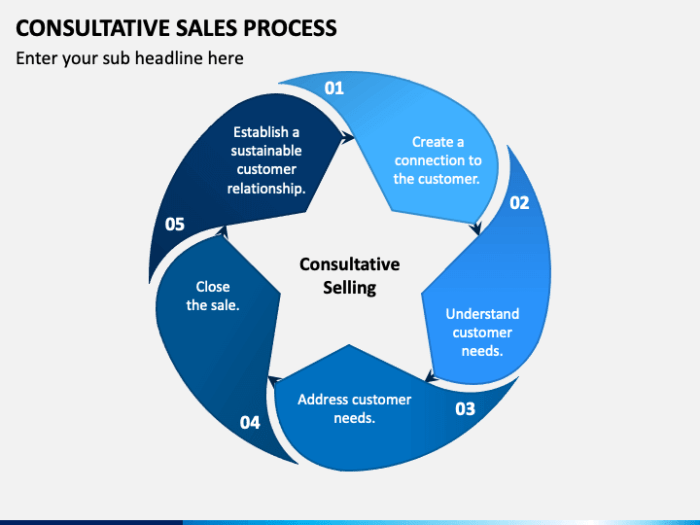
So, there you have it: the Consultative Sales Approach, where selling is more about listening than talking and where every customer interaction is an adventure waiting to be had. With the right techniques and a sprinkle of charm, you can turn your sales process into a delightful journey that leaves customers smiling and coming back for more!
Query Resolution
What is the main goal of the Consultative Sales Approach?
The main goal is to understand and address customer needs through meaningful conversations, leading to tailored solutions.
How does consultative selling differ from traditional selling?
Consultative selling focuses on building relationships and understanding customer needs rather than simply pushing products.
What industries benefit the most from the Consultative Sales Approach?
While many industries can benefit, those involving complex products or services, like technology and healthcare, see significant advantages.
Are there specific skills needed for consultative selling?
Yes, key skills include active listening, empathy, problem-solving, and effective communication.
How can I measure the success of a consultative sales approach?
Success can be measured through customer satisfaction, retention rates, and overall sales growth attributed to strong relationships.


